
Trackers are a way to make music outside the conventional process. Tracker music contests are a means to finish a track. It’s interesting but not easy.
My usual process is to open FL Studio, set a direction and constraints with a phrase or two, come up with a title, then make the track. “Making a track” gets tedious after 5–6 repetitions. Then I do a “fill”: a musical experiment in an unusual program or with unusual constraints. During vacation, these fills happen more often.
Finishing such experiments and releasing a completed track is rare. According to my experimental project files over two years, only two tracks out of 15–20 attempts have been released. Both tracks were prepared for contests. The first — Reunion — was made for the SunVox contest. The second — Chaos Control — was created in MilkyTracker for the Chaos Constructions 2024 festival.
Why use a tracker at all? A tracker forces you to look at music differently. Musical phrases are packed into phrases, notes are explicitly written, and time moves from top to bottom. It looks a lot like an Excel spreadsheet.
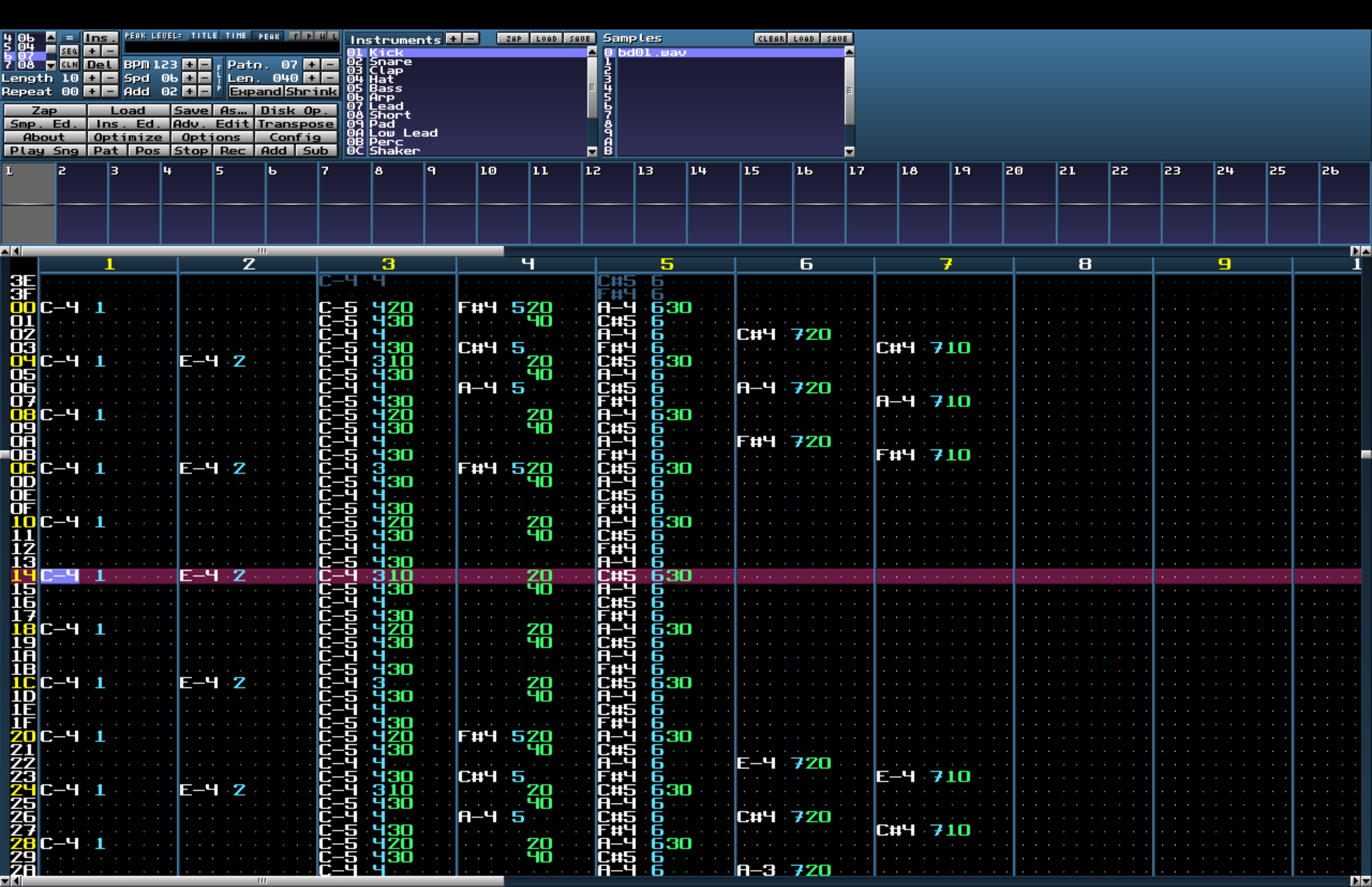
MilkyTracker is an open-source implementation of the popular FastTracker II. It lacks the distractions of a DAW:
- It’s just a sampler;
- No plugins;
- No effects.
Such limitations offer a significant advantage in the speed of creating a musical idea. After about an hour of work, I had the skeleton of the future composition. Another two hours went into adding rhythmic elements. One pattern was ready. Fast and fun.
Making a complete track from an idea in a tracker is harder. Assembling patterns into a track in MilkyTracker is less convenient and slower compared to other DAWs. It took me about 5–6 hours to create the track. In FL Studio, I can manage it in 2–3 hours.
I suspect that I lacked knowledge of MilkyTracker and some arrangement secrets for trackers. I did the following:
- Copied the pattern several times;
- Deleted unnecessary notes and commands;
- Added variations and decorations.
It sounds simple, but doing it in the program is labor-intensive: you need to keep track of which order corresponds to which part of the song, which notes are on which channel, and what variation I made in the previous step.
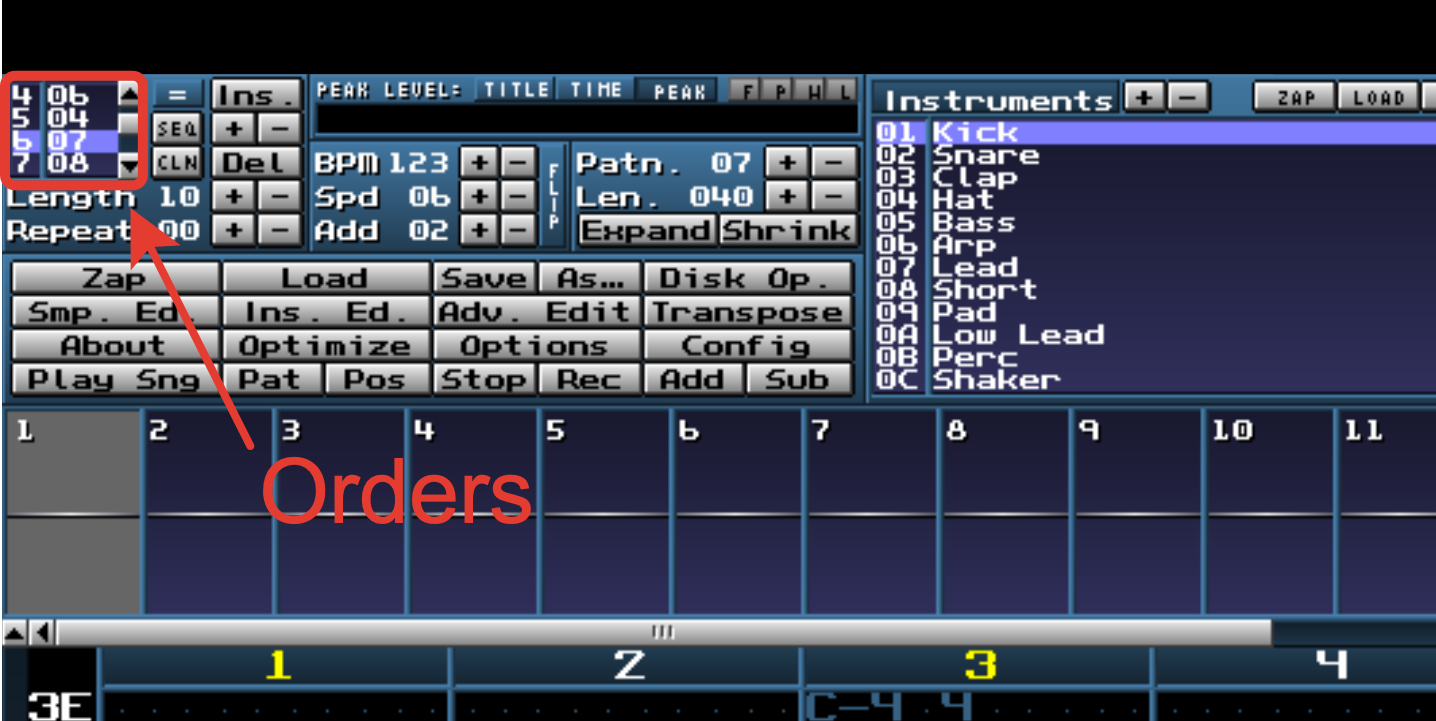
To help, I made a text file where I recorded which pattern is in which order and what part of the song it is. It would have been useful to make more detailed notes.
The track experiment Chaos Control is complete. I submitted it to the tracker music contest at the Chaos Constructions 2024 festival. The track can be listened to and downloaded for free on Boosty. The XM project created in MilkyTracker is available for free on ModArchive and Boosty. There will be no streaming release for Chaos Control.